
Updated Nov 08, 2019

Molly Case
Send MessageStage 4: Transition to Scale
Registered in Haiti.
Focus Areas:
Water Sanitation and Hygiene (WASH), Climate Change and Resilience and Health
Implemented In:
Haiti
Problem
An estimated 700 million people in urban communities globally lack access to sanitation due to the lack of suitable, affordable sanitation infrastructure and service delivery models. As a direct result of this, diarrhea kills 2,195 children every day—more than AIDS, malaria, and measles combined. As aquatic ecosystems become increasingly polluted with nutrients from human waste, the earth’s soil nutrients are rapidly declining, leading to increased vulnerability to climate change.
Solution
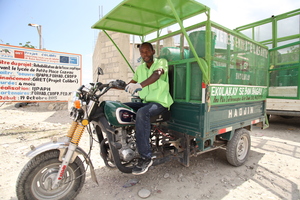
SOIL is developing a model to provide affordable household sanitation services even in the world’s most vulnerable urban communities. For a small monthly fee, SOIL's growing service, EkoLakay, provides households with toilets, waste collection, and safe treatment of wastes using a composting process that respects WHO standards. To date, 350 tons of compost have been produced, establishing a circular economy model that's transforming a public health crisis into an environmental solution.
Mission and Vision
Competitive Advantage
Milestones